
Home / Blog / Plumber Cost in Belleville, IL: 2026 Price Guide
Plumber Cost in Belleville, IL: 2026 Price Guide
Calling a plumber always comes with the same nervous question: what is this going to cost me? The answer is less mysterious than it feels. Plumbers price their work in a few standard ways, and once you understand the structure, you can read any quote with confidence and spot the ones that do not add up. This guide walks through what plumbers charge in 2026, what common jobs cost on average nationally, what pushes a bill higher, and how to protect yourself from overpaying. Every price below is a published national or industry average, not a quote from any specific company, and Belleville rates will land somewhere around these numbers depending on the job.
How Plumbers Charge: Three Pricing Models
Almost every plumbing invoice you will ever see is built from one of three pricing models, sometimes mixed together. Knowing which one you are being quoted matters because each one shifts the risk between you and the plumber.
The service call or diagnostic fee
Most plumbers charge a fee just to show up, typically $50 to $150 nationally, with the average sitting near $100 (Plumbing Sniper, 2026). This covers travel, the plumber's time to diagnose the problem, and often the first portion of labor. Some companies apply the fee toward your total if you approve the repair on the spot, which effectively makes the diagnosis free. Others charge it separately no matter what. Always ask which version you are getting before anyone dispatches a truck, because it is the easiest question that saves real money.
Hourly rates
Nationally, plumbers charge roughly $45 to $200 per hour for labor, with most residential work clustering between $75 and $150 an hour (HomeGuide, 2026; 5Estimates, 2026). The rate often reflects the license level doing the work: an apprentice working under supervision runs $45 to $70 an hour, a journeyman plumber $80 to $130, and a master plumber $120 to $200 (5Estimates, 2026). Hourly pricing usually comes with a one-hour minimum, and you should ask whether the clock starts when the plumber arrives or when they leave the shop, and whether travel time is billed. Hourly suits diagnostic work and jobs where nobody can predict what is behind the wall. The risk sits with you: a slow worker or a surprise complication both show up on the invoice.
Flat-rate pricing
Many companies now quote common jobs at a fixed price agreed before work starts. Nationally, most plumbers set a flat-rate minimum around $200 to $250 for a standard visit (Ypages, 2026). Flat-rate shifts the risk to the plumber: if the job takes longer than expected, you still pay the quoted number. For routine work like a toilet rebuild or a faucet swap, flat-rate is usually the calmer option. Just make sure the quote is in writing and spells out exactly what is included, because a flat price that excludes parts is not really a flat price.
Average Plumbing Costs by Job: 2026 National Averages
The table below collects published 2026 national averages for the jobs homeowners call about most. Use these to sanity-check a quote, not to argue that a specific company should match them to the dollar. Local labor rates, access, and parts choices move every number.
| Service | Typical National Range |
|---|---|
| Service call / trip fee | $50 to $150 |
| Hourly labor rate | $45 to $200 per hour |
| Standard visit (1 to 2 hour job) | $175 to $450 |
| Faucet repair | $75 to $250 |
| Faucet installation | $150 to $450 |
| Toilet repair | $100 to $400 |
| Toilet installation | $200 to $800 |
| Drain cleaning (snaking) | $100 to $350 |
| Hydro jetting | $250 to $800 |
| Sewer camera inspection | $100 to $500 |
| Water heater repair | $150 to $600 |
| Water heater install (tank) | $800 to $2,500 |
| Water heater install (tankless) | $1,500 to $4,500 |
| Sewer line spot repair | $1,000 to $4,000 |
| Sewer line replacement | $3,000 to $25,000 |
| Whole-house repiping | $2,000 to $15,000 |
| Emergency / after-hours visit | $250 to $800+ |
Sources: Plumbing Price Guide (2026), Plumbing Sniper (2026), HomeGuide (2026). Ranges reflect national data; your quote will vary with local labor rates and job specifics.
What Common Jobs Actually Involve (and Why They Cost What They Do)
Sticker shock usually comes from not knowing what is inside the number. Here is what drives the price of the five calls plumbers get most.
Faucet repair and replacement ($75 to $450)
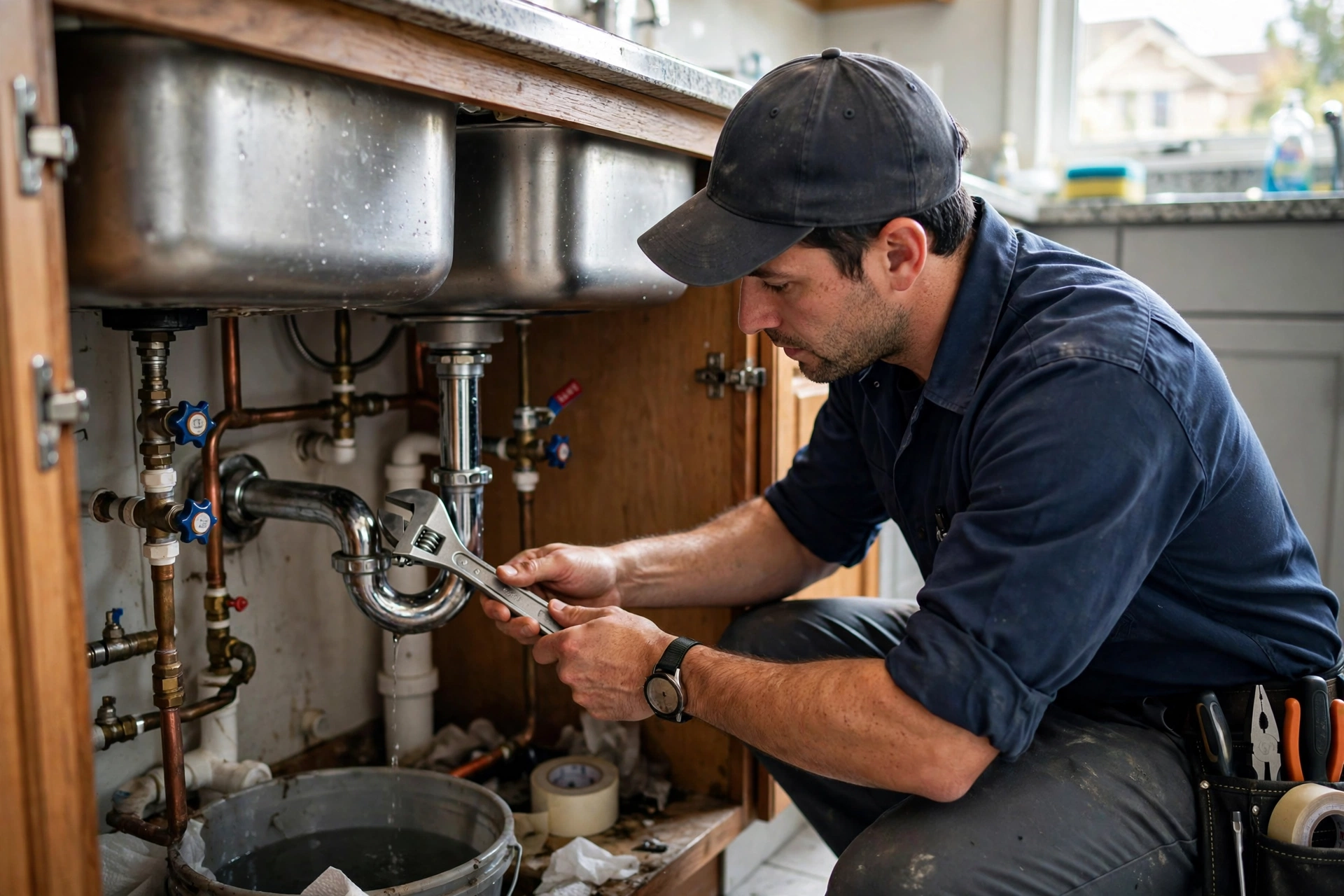
A dripping faucet is usually a worn cartridge, O-ring, or valve seat, and the repair itself is quick. What moves the price is the faucet: a basic builder-grade faucet costs little, while a designer fixture can cost hundreds before labor starts. If the shutoff valves under the sink are frozen or corroded, the plumber has to deal with those too, which adds time. Our faucet repair page covers what is typically involved.
Toilet repair and installation ($100 to $800)
Most toilet repairs are fill valves, flappers, or wax rings, and they land in the lower half of the range. A full toilet replacement costs more because it includes the fixture itself plus removal and disposal of the old one. A toilet that rocks on the floor or leaks at the base can mean a damaged flange, which turns a simple swap into a bigger job. See our toilet repair page for details.
Water heater repair and installation ($150 to $4,500)
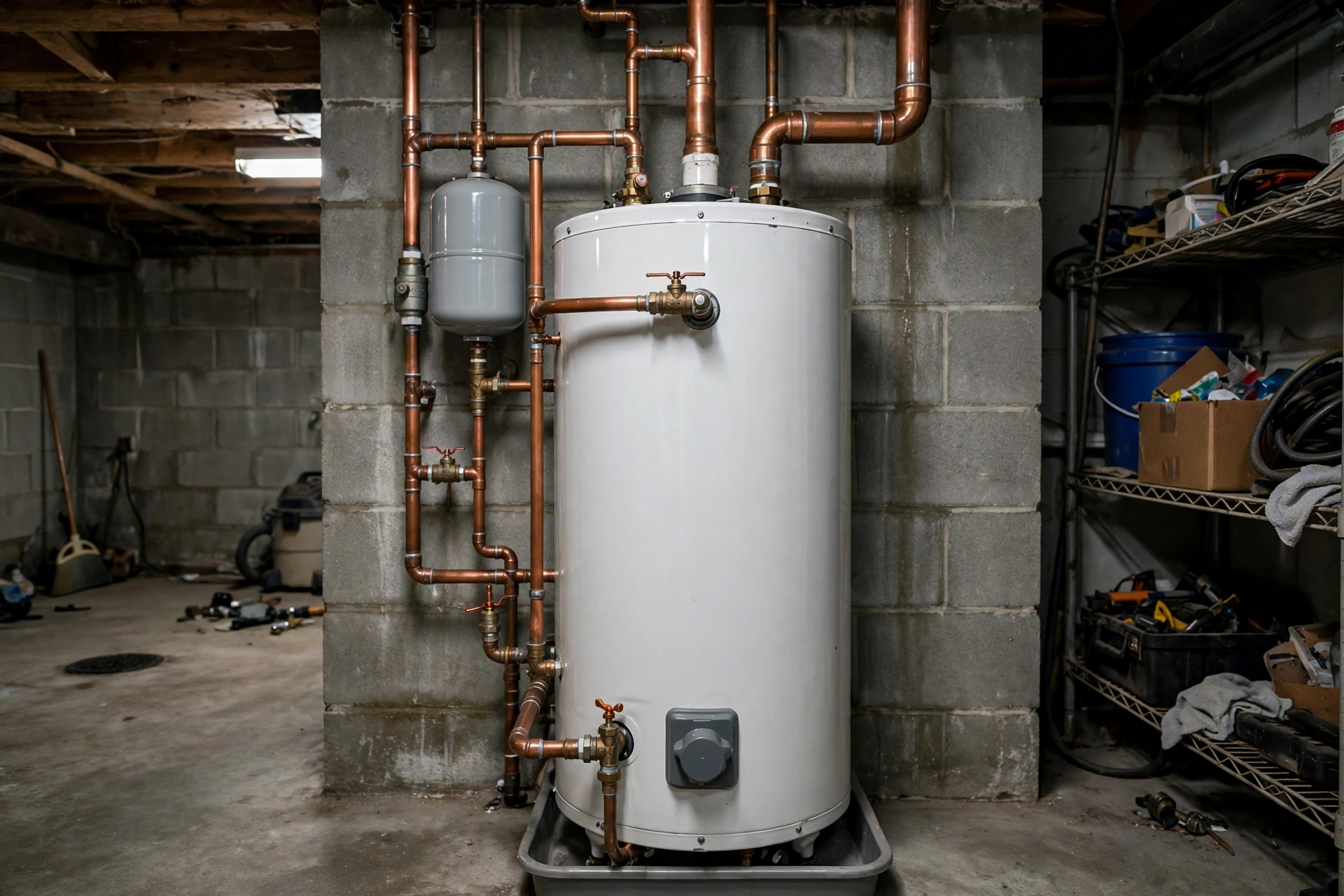
Water heater work spans the widest range because it covers everything from a $150 thermostat swap to a $4,500 tankless installation. Tank replacements nationally average $800 to $2,500 installed, while tankless units run $1,500 to $4,500 installed (Plumbing Price Guide, 2026). Gas line work, venting changes, and permit requirements push installations toward the top of those ranges. Our companion guide on water heater repair vs. replacement walks through the decision in detail, and our water heater repair page covers common fixes.
Drain cleaning ($100 to $800)
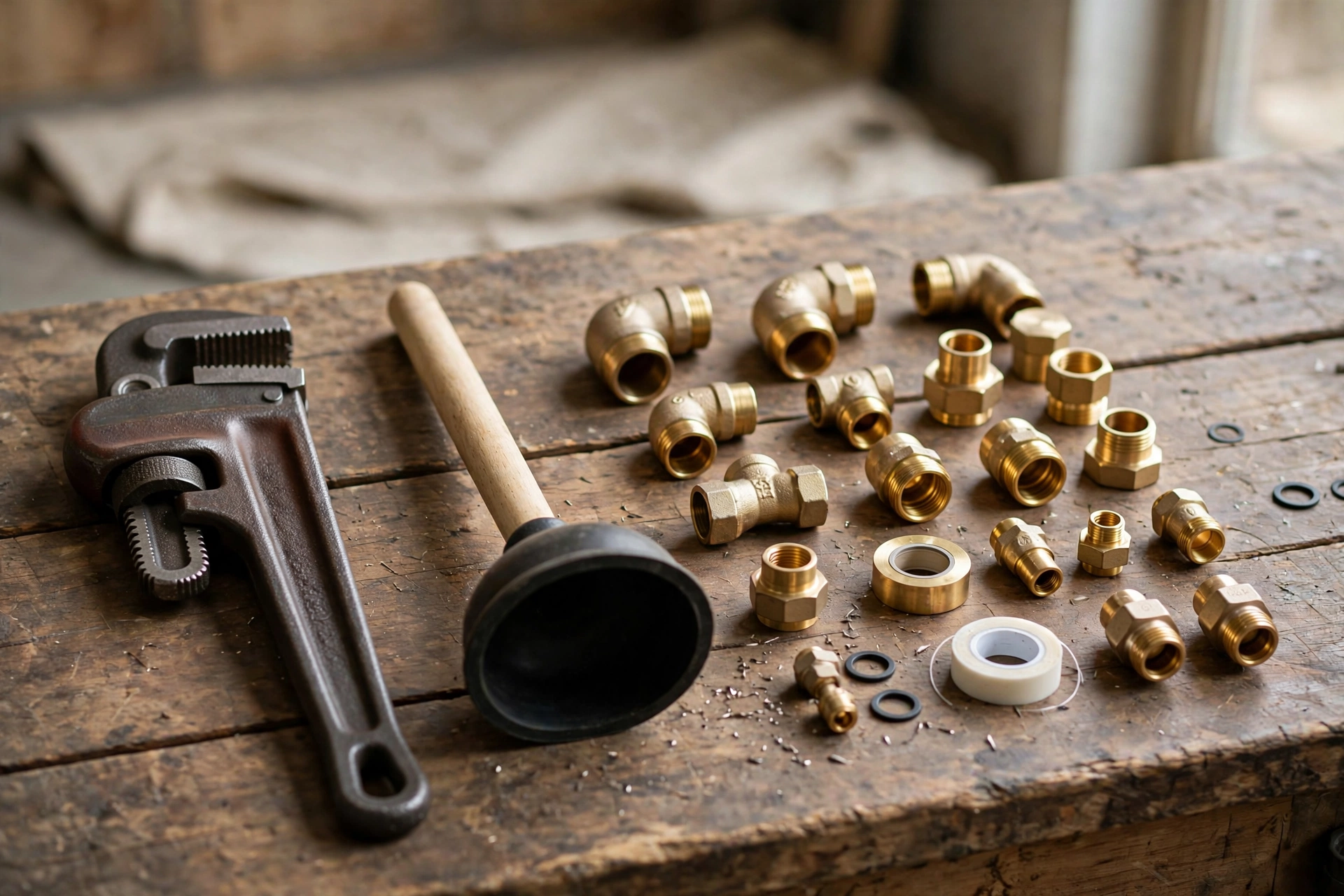
A simple fixture clog cleared with a snake usually costs $100 to $275, while hydro jetting a main line runs $300 to $800 or more (Royal Class Service, 2026). What you are paying for is mostly equipment and expertise: a pro with a camera can tell you whether the clog is grease, roots, or a collapsed pipe, which is the difference between a $200 clearing and a $4,000 repair. Our drain cleaning page explains the methods, and our drain troubleshooting guide helps you diagnose the problem before you call.
Sewer line repair and replacement ($1,000 to $25,000)
This is the big one, and the range is huge because the work varies so much. A spot repair on an accessible section might cost $1,000 to $4,000, while a full replacement, especially one requiring excavation under a driveway or landscaping, can reach $25,000 (Plumbing Price Guide, 2026). Trenchless methods can reduce the digging but not always the cost. A camera inspection ($100 to $500) is almost always worth it before committing, because it tells you exactly what is wrong and where. See our sewer line repair page for more.
What Drives Your Price Up or Down
Two neighbors can call about the "same" problem and get very different quotes. These are the factors that move the number.
- Timing. After-hours, weekend, and holiday calls typically run 1.5 to 3 times standard rates (Ypages, 2026). A burst pipe at 2 a.m. is worth the premium; a slow drip can wait until Monday morning.
- Access. A pipe in an open basement ceiling is an hour of work. The same pipe behind a tiled shower wall means demolition, repair, and patching. Easy access is one of the biggest cost savers there is.
- Age of the system. Older homes with galvanized supply lines or cast iron drains turn single-fix visits into larger conversations. Budget a contingency on older plumbing.
- Parts tier. A builder-grade fill valve and a premium one differ by about $40 in parts; a builder-grade faucet and a designer one can differ by $400. Labor is the same either way, so the fixture you choose matters.
- Permits and code work. Jobs requiring permits and inspections, like water heater installations or repiping, carry municipal fees (roughly $30 to $500 nationally) plus the labor to meet code (Ypages, 2026).
- How many issues you bundle. The trip fee is the same whether the plumber fixes one thing or three. Bundling small jobs into a single visit spreads that fixed cost across more work.
Real talk: The cheapest quote is not always the cheapest job. A bid that skips the camera inspection, reuses old supply lines, or is not itemized can turn into change orders that blow past the "expensive" quote by the end. Compare what is included, not just the bottom line.
How Quotes Work (and What a Fair One Looks Like)
A fair plumbing quote has a few recognizable features. First, it is in writing, with the work described specifically enough that another plumber could read it and know what was promised. "Fix leak" is not a description; "replace wax ring and reset toilet, includes new supply line" is. Second, it separates labor, parts, and any fees, or at least gives a flat total with the scope clearly defined. Third, it states the warranty on labor. Fourth, for larger jobs, it notes who pulls the permit.
Be cautious of quotes given entirely over the phone for anything beyond the simplest fixture work. A reputable plumber wants to see the job before committing to a number, because so much of plumbing cost lives behind walls and under floors. Phone estimates are fine as ballparks; written on-site quotes are what you should compare.
It is also worth asking a few direct questions before anyone starts: Is the service call fee applied to the repair? Is this hourly or flat-rate, and what exactly is included? What happens if you open the wall and find something worse? The answers tell you as much about the company as the price does. You can always reach us through our contact page to ask these questions upfront.
How to Avoid Overpaying
You do not need to become a plumber to keep your bills reasonable. A few habits cover most of it.
- Get two or three written quotes for big jobs. For anything over a few hundred dollars, comparison shopping is worth the effort. For small repairs, the trip fees eat the savings, so one trusted company is fine.
- Bundle small jobs. That dripping faucet, the running toilet, and the slow shower drain can all be handled in one visit for little more than the cost of one.
- Book during standard hours when you can. If water is not actively damaging your home, waiting for a weekday morning avoids the 1.5x to 3x emergency premium.
- Ask about the service call credit. Many plumbers apply the diagnostic fee toward the repair if you proceed. If yours does not, that is useful information for next time.
- Know your shutoffs. Being able to kill the water to a single fixture (or the whole house) turns a potential emergency into a scheduled visit. It is the highest-value five minutes of homeowner education there is.
- Do not authorize work you do not understand. A good plumber can explain the problem and the fix in plain language. If the explanation does not make sense, get a second opinion before the wrench turns.
Real talk: Maintenance is the cheapest plumbing you will ever buy. A water heater flush, new supply lines before they burst, and fixing small leaks promptly cost a fraction of the emergency calls they prevent. Almost every expensive plumbing bill starts as a cheap one that got ignored.
Reading Your Invoice: What Each Line Item Means
Even a clear quote can feel opaque once it becomes an invoice with line items. Here is what the common ones mean, so nothing slips past you.
- Diagnostic / trip charge. The fee for showing up and finding the problem. If it was supposed to be credited toward the repair, verify the credit appears.
- Labor. Either hours multiplied by the hourly rate, or a flat labor figure. For hourly jobs, the invoice should show the time spent, not just a total.
- Materials / parts. The fixtures, valves, pipe, and fittings used. For larger jobs, ask for part numbers or at least descriptions specific enough to verify, because a $40 valve and a $140 valve look identical once installed.
- Permit fees. Municipal charges passed through at cost. These should match the actual permit fee, not include a markup.
- Disposal / haul-away. Removing an old water heater, toilet, or debris. Reasonable when there is genuinely something bulky to remove; questionable on a faucet repair.
- After-hours surcharge. The emergency premium, shown separately on some invoices. Confirm it matches what you were told on the phone.
If any line item surprises you, ask about it before paying, not after. A legitimate company will walk you through every line without defensiveness. And keep the paid invoice. It is your proof of what was done, which parts were installed, and what labor warranty applies, and it matters if anything fails or if you sell the house and want to show the work was done professionally.
Proactive vs. Emergency: Timing Is Money
There is a quiet pattern behind the most expensive plumbing bills: the work was urgent, so comparison shopping was impossible. A water heater that gets replaced on your schedule, with two written quotes and a weekday appointment, costs meaningfully less than the same unit installed at 9 p.m. after it floods the utility room. The same is true for a sewer line you camera-inspect on purpose versus one you discover during a backup, or supply lines you replace during a planned repiping project versus ones that burst in January.
This is the real argument for paying attention to your plumbing before it demands attention. Annual water heater flushing, replacing aging supply hoses, fixing small leaks promptly, and getting a camera inspection when drains start slowing are all cheap compared to their emergency counterparts. You do not need to be anxious about your pipes. You just need to be earlier than the failure. The cheapest plumbing job is always the one you schedule yourself.
A Note on Belleville Pricing
National averages are a starting point, not a promise. The Belleville and St. Clair County market sits in the middle of the national range for most residential work: not the cheapest rural rates, not big-city premiums. Older homes, which Belleville has plenty of, can nudge costs up when galvanized or aging pipes complicate a straightforward repair. The best move is the same everywhere: get the quote in writing, compare scope apples to apples, and ask the questions above. If you want to talk through a project, our about page explains how we work, and you can call (618) 573-0073 anytime.
Frequently Asked Questions
How much does a plumber cost per hour in 2026?
Nationally, plumbers charge about $45 to $200 per hour depending on license level and region, with most residential work between $75 and $150 an hour (HomeGuide, 2026; 5Estimates, 2026). Most visits also carry a service call fee of $50 to $150 on top of the hourly charge.
What is the average cost of a standard plumber visit?
A typical 1 to 2 hour residential visit averages around $280 to $340 nationally, with most falling between $175 and $450 (Plumbing Sniper, 2026; Ypages, 2026). Emergency or after-hours visits run significantly higher, often $250 to $800 or more.
Do plumbers charge a fee just to show up?
Usually, yes. The service call or diagnostic fee ($50 to $150 nationally) covers travel and diagnosis. Many companies credit it toward the repair if you approve the work, but not all do, so ask before booking.
Is flat-rate or hourly pricing better?
For routine, predictable jobs like fixture replacements, flat-rate gives you cost certainty. For diagnostic work or jobs with unknowns behind walls, hourly is more common. Either is fair as long as the scope is in writing and you understand what is included.
How much does it cost to fix a leaky faucet?
Faucet repairs nationally average $75 to $250, while full faucet installations run $150 to $450, with the fixture itself driving much of the difference (Plumbing Price Guide, 2026).
Why do emergency plumber calls cost so much more?
After-hours work typically bills at 1.5 to 3 times standard rates because the plumber is staffing nights, weekends, and holidays (Ypages, 2026). If water is actively damaging your home, the premium is worth it. If it can wait safely, a weekday appointment costs far less.
Related Guides
References
- Plumbing Sniper. (2026). How much does a plumber cost in 2026? City-by-city guide. https://plumbingsniper.com/how-much-does-a-plumber-cost/
- Plumbing Price Guide. (2026). How much does a plumber cost? 2026 price guide. https://plumbingpriceguide.com/plumbing-cost/
- Ypages. (2026). Plumber cost in the USA: Hourly rates and job prices. https://ypages.us/blog/plumber-cost/
- 5Estimates. (2026). Plumber cost in 2026: Hourly rates + free price calculator. https://5estimates.com/plumbers/
- HomeGuide. (2026). 2026 plumber cost per hour: Average rates to hire a plumber. https://homeguide.com/costs/plumber-cost
- Royal Class Service. (2026). How much does drain cleaning cost in 2026? Professional & DIY prices. https://www.royalclassservice.com/blog/how-much-does-drain-cleaning-cost
Plumbing problem that won't wait?
Belleville IL Plumbers is available 24/7 across Belleville and St. Clair County. Call (618) 573-0073 for upfront written pricing before any work begins.