
Home / Blog / Water Heater Repair vs Replacement in Belleville, IL: How to Decide
Water Heater Repair vs Replacement in Belleville, IL: How to Decide
Few household decisions feel as annoying as the water heater one. It is not glamorous, the timing is always bad, and the price gap between "fix it" and "replace it" is big enough to make you second-guess everything. The good news: this is one of the most formulaic decisions in homeownership. Age plus repair cost tells you almost everything you need to know. This guide lays out the honest math, the national average costs for both paths, and the situations where each choice clearly wins, so you can decide with confidence instead of dread.
The 50% Rule: The Starting Point for Every Decision
Plumbers use a simple rule of thumb: if the repair costs more than about half the price of a new comparable unit, replacement usually wins (Charles & Hudson, 2026; Angi, 2026). A $500 repair on a unit that would cost $1,000 to replace is borderline. An $800 repair on that same unit is not, especially if the unit is old.
But the 50% rule is only half the formula. Age is the other half, and it matters more than most people think. A three-year-old unit with a failed thermostat is a repair every time, because the tank itself has a decade of life left. A twelve-year-old unit with the same failed thermostat is a judgment call, because you are putting new parts into a tank that is already past its expected lifespan. Neither factor alone tells the story; together they almost always do.
How Long Water Heaters Actually Last
Lifespan expectations set the whole decision. Conventional tank water heaters typically last 8 to 12 years, while tankless units can run 20 years or more with proper maintenance (Charles & Hudson, 2026; Angi, 2026). Those numbers assume at least basic care: an annual flush for sediment and a working anode rod. Without maintenance, tanks fail sooner, sometimes much sooner in areas with hard water, because sediment and mineral buildup attack the tank lining from the inside.
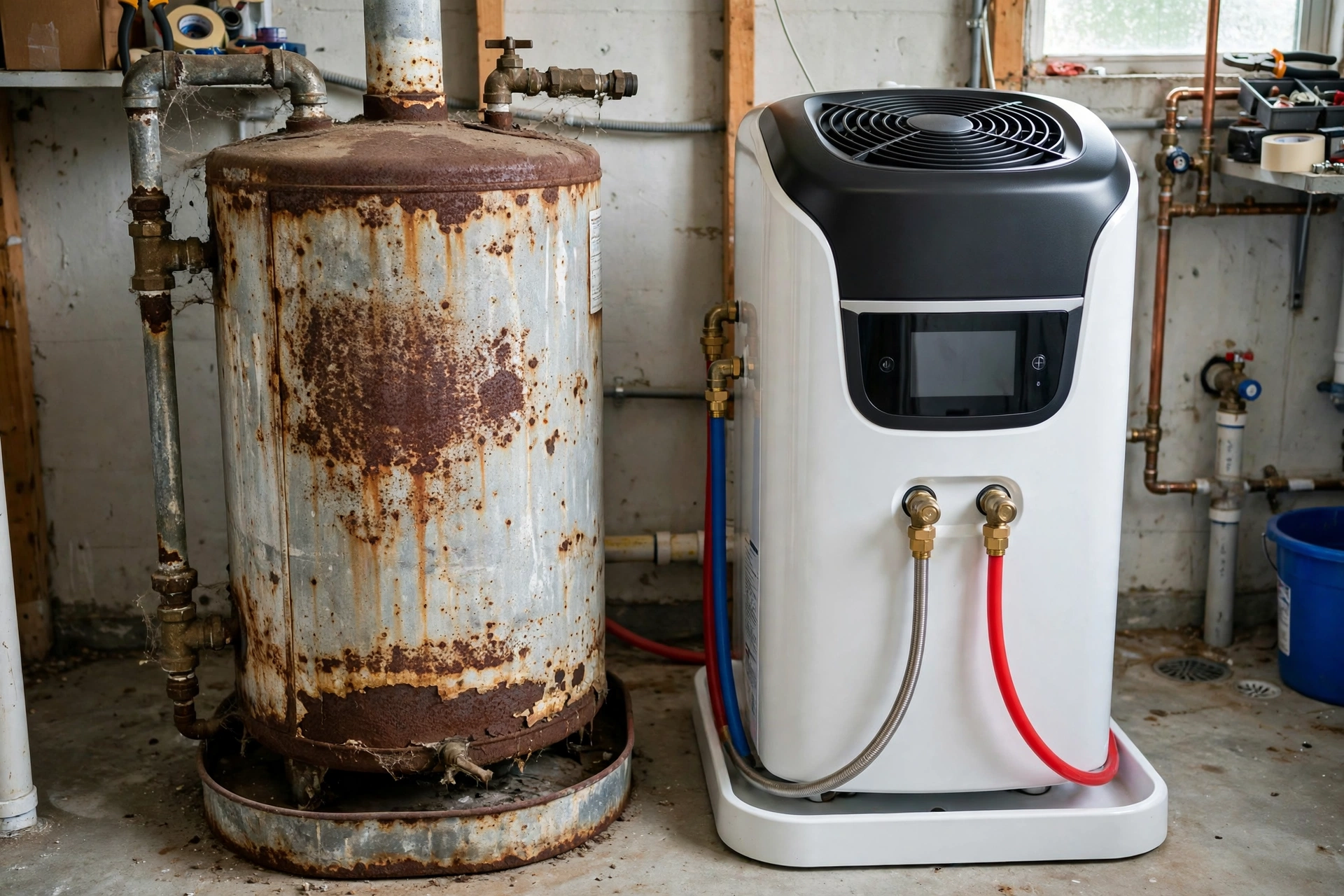
Check the manufacture date on your unit's rating plate. The serial number usually encodes it, and most manufacturers print the date plainly. If you cannot find it, the general appearance tells a story: heavy rust on the jacket, corrosion at the pipe connections, and a damp base are all signs of a unit in its final years. If your tank is over ten years old, every repair decision should be weighed against replacement, because you are buying time, not buying years.
What Repairs Cost: 2026 National Averages
Most water heater repairs are component swaps, and the national averages below come from published 2026 industry data. The national average repair cost is about $616, with most homeowners paying between $228 and $1,017 depending on the part and complexity (Angi, 2026).
| Repair | Typical National Range |
|---|---|
| Sediment flush | $80 to $200 |
| Thermostat replacement | $100 to $300 |
| Heating element (electric) | $200 to $400 |
| Anode rod replacement | $150 to $250 |
| Pressure relief valve | $100 to $200 |
| Pilot light / igniter repair | $150 to $350 |
| Gas control valve | $400 to $800 |
| Tankless control board | $400 to $900 |
Sources: Charles & Hudson (2026), Angi (2026). Labor typically runs $75 to $150 per hour, and most repairs take one to three hours.
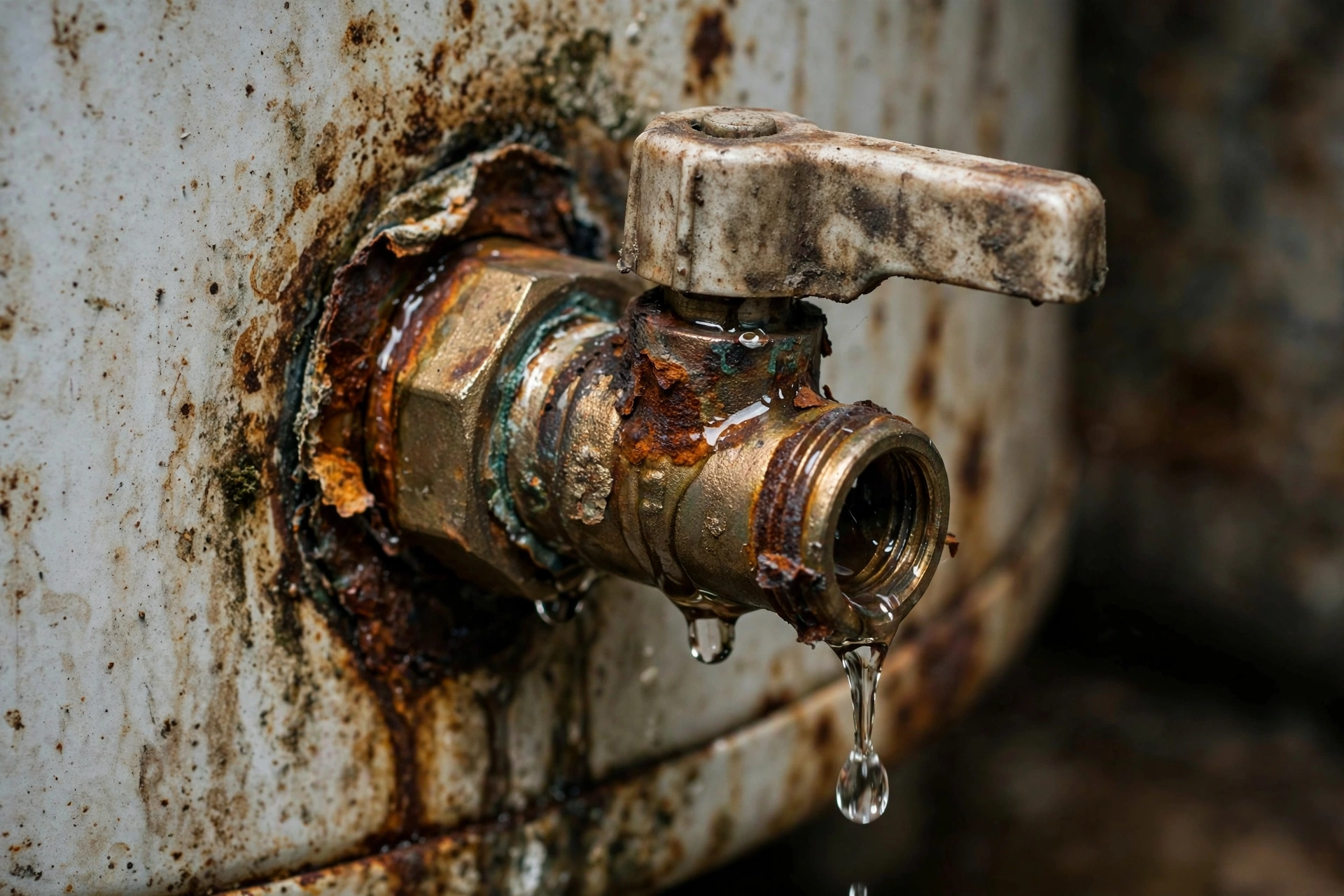
A few repairs deserve special attention. A sediment flush ($80 to $200) is the cheapest meaningful service you can buy for a tank unit; that gravel-in-a-dryer rumbling is sediment boiling at the bottom of the tank, and flushing it restores efficiency and extends tank life. An anode rod replacement ($150 to $250) is the repair most homeowners have never heard of and most should consider: the rod sacrifices itself to corrosion so the tank does not have to, and replacing a spent one can add years to a mid-life unit. And a leaking tank is not a repair at all. Once the tank itself cracks or rusts through, no part swap fixes it. That is a replacement conversation, full stop.
What Replacement Costs: 2026 National Averages
Replacement means the unit plus installation, and installation is a real portion of the bill: venting, gas lines, water connections, and permits all factor in.
| Replacement Type | Typical National Range (Installed) |
|---|---|
| Conventional tank (40-50 gallon) | $800 to $2,500 |
| Tankless (whole-home) | $1,500 to $4,500 |
| Tankless (with venting/gas upgrades) | $4,500 to $7,500+ |
Sources: Plumbing Price Guide (2026), Angi (2026), Carter's My Plumber (2026). Some plumbers report typical replacement invoices averaging around $3,550 when venting and code upgrades are included.
Why such wide ranges? A straightforward tank swap, where the new unit drops into the same footprint with the same fuel type, lands near the bottom. Changing fuel type (electric to gas), upgrading venting, upsizing the gas line for a tankless unit, or bringing an older installation up to current code all push toward the top. This is why on-site quotes matter so much for replacements: two "water heater replacements" can be very different jobs. Our water heater repair page covers the services involved, and our plumber cost guide explains how installation quotes are structured.
When Repair Clearly Wins
Repair is the right call when most of these are true:
- The unit is under 8 years old. A mid-life tank has years left; fix the failed component and move on.
- The repair is well under half the replacement cost. A $250 thermostat on a unit that costs $1,200 to replace is an easy yes.
- The tank itself is sound. No active leaks, no significant rust or corrosion on the tank body. Component failures on a solid tank are normal wear.
- This is the first problem, not the fifth. One repair in eight years is maintenance. Three repairs in two years is a pattern.
- You plan to move within a few years. If you will not be around to enjoy a new unit's lifespan, a repair that buys two or three reliable years can be the rational choice.
Real talk: The anode rod is the most underrated repair in plumbing. For $150 to $250, replacing a depleted rod on a 6-year-old tank can genuinely add years to its life. Most failed tanks died because nobody ever checked the rod. If your unit is mid-life and has never had one replaced, ask about it.
When Replacement Clearly Wins
Replacement is the smarter long-term move when most of these are true:
- The unit is 10 or more years old. Past this point, you are on borrowed time statistically, and each repair buys less of it.
- The tank is leaking or heavily corroded. A compromised tank cannot be repaired. Patch products exist; none of them are a real fix.
- Repairs are becoming frequent. Multiple service calls in the last couple of years mean the unit is failing systemically, not having bad luck.
- The repair quote exceeds half the replacement cost. At that point you are paying new-unit money for old-unit life.
- You are tired of running out of hot water. Household needs change. A unit that was fine for two people may not serve five, and no repair fixes an undersized tank.
- Energy bills are climbing. Older tanks lose efficiency as sediment insulates the bottom and components wear. A new unit, especially a high-efficiency or tankless model, can cut water heating costs noticeably.
There is also the failure nobody plans for: the tank that lets go while you are at work. A ruptured 50-gallon tank can do thousands in water damage in hours, far more than the cost difference between repairing and replacing ever was. If your unit is old and showing rust, that risk is part of the math too. Our leak detection page covers catching water problems early.
Tank vs. Tankless: Should You Switch During Replacement?
If you have decided to replace, the next question is whether to stick with a tank or go tankless. Honest comparison:
- Upfront cost. Tankless costs roughly double a tank installed, and more if your home needs gas line or venting upgrades.
- Lifespan. Tankless units last 20+ years vs. 8 to 12 for tanks. Over a long stay, you might buy two tanks in the life of one tankless.
- Energy. Tankless units only heat water on demand, eliminating the standby losses of keeping 50 gallons hot all day. Savings are real but modest for most households, and the payback period on the price premium is long.
- Endless hot water. This is the lifestyle win. No more scheduling showers around the dishwasher. But tankless units have flow-rate limits: run two showers plus the washing machine in winter, and even a good unit can struggle.
- Maintenance. Tankless units need annual descaling, especially in hard water areas. Skip it and performance degrades fast. Tanks need annual flushing too, but the consequences of skipping are slower.
Switching from tank to tankless is not a drop-in swap: it often requires a larger gas line, new venting, and sometimes electrical work, which is why the installed cost can run well above a standard tank swap. If your home already has the infrastructure, or you are doing a larger remodel anyway, the upgrade math improves a lot. Note that gas line modifications are specialized work; see our gas line repair page for what that involves.
Sizing Your New Water Heater Correctly
If replacement wins, the next decision is size, and this is where many homeowners go wrong in both directions. An undersized tank means cold showers during back-to-back use; an oversized one wastes energy heating water nobody uses.
For tank units, size is measured in gallons, and the right number depends on household size and simultaneous use. As a rough guide used across the industry: a 40-gallon tank typically serves one to two people, a 50-gallon tank serves three to four, and larger households or homes with big soaking tubs may need 75 gallons or more. But gallons are only half the story. The first-hour rating, which measures how much hot water the unit can deliver in an hour of heavy use, matters more than tank size for real-world performance. Two 50-gallon tanks can have meaningfully different first-hour ratings depending on burner power and recovery rate.
For tankless units, size is measured in flow rate (gallons per minute) and temperature rise. A unit that delivers 9 gallons per minute in a warm climate might deliver far less in an Illinois winter, when incoming groundwater is colder and the unit must work harder to reach shower temperature. This is the most common tankless sizing mistake: buying for the brochure number instead of the winter number. A plumber sizing a tankless unit for a Belleville home should be asking about your coldest-month groundwater temperature and counting your simultaneous fixtures, not just matching the old tank's gallon rating.
Oversizing has a cost beyond the purchase price. An oversized tank cycles more and loses more standby heat; an oversized tankless costs more upfront for capacity you never use. The sweet spot is a unit sized for your realistic peak demand, which for most families means the morning rush: two showers plus a dishwasher or laundry running at once. If your household is growing, size for where you will be in five years, not just today.
Planning the Replacement: Proactive Beats Emergency
Here is something the cost tables do not show: when you replace matters almost as much as what you replace with. A planned replacement lets you get multiple written quotes, choose your unit without pressure, schedule a weekday installation, and handle any code upgrades or venting changes calmly. An emergency replacement, decided at 8 p.m. with water on the floor, means accepting the first available option at after-hours rates with no time to compare.
The price gap between those two scenarios can be hundreds of dollars on the same equipment. That is why the smartest move with an aging water heater is deciding on your timeline before the tank decides for you. If your unit is past 10 years and showing rust, start getting quotes now, while you can still say no to any of them. Ask each plumber the same questions: what size do you recommend and why, what code upgrades will my installation need, and what is the total installed price with permits included. The answers will vary, and the variation itself is useful information.
One more timing note: if your water heater shares space or venting with a furnace, or if you are considering switching fuel types, coordinate the projects. A gas line upgrade that serves both a new tankless unit and a future appliance costs less done once than done twice. Our gas line page covers what that work involves.
The Efficiency Math, Simplified
Water heating is typically one of the largest energy uses in a home, so efficiency is worth a quick calculation, not a sales pitch. A standard older tank might operate at 60 to 65 percent efficiency, while a new high-efficiency tank or tankless unit can exceed 90 percent. On a household spending several hundred dollars a year heating water, that gap is meaningful over a decade, but it rarely justifies replacing a working mid-life unit early on energy savings alone.
Where efficiency math does matter is at the replacement decision you were already making. If the old unit has to go anyway, the incremental cost of a higher-efficiency model often pays back within its lifespan. And in hard water areas, a water softener protects any water heater you choose: softened water means less scale on elements and heat exchangers, which keeps efficiency closer to the rated number for years instead of months.
Real talk: Nobody regrets replacing a 14-year-old rusting tank before it floods the basement. Plenty of people regret the $600 repair they put into one six months before it failed anyway. When the unit is old and the tank looks rough, replacement is not the expensive option. The flood is.
What About Heat Pump (Hybrid) Water Heaters?
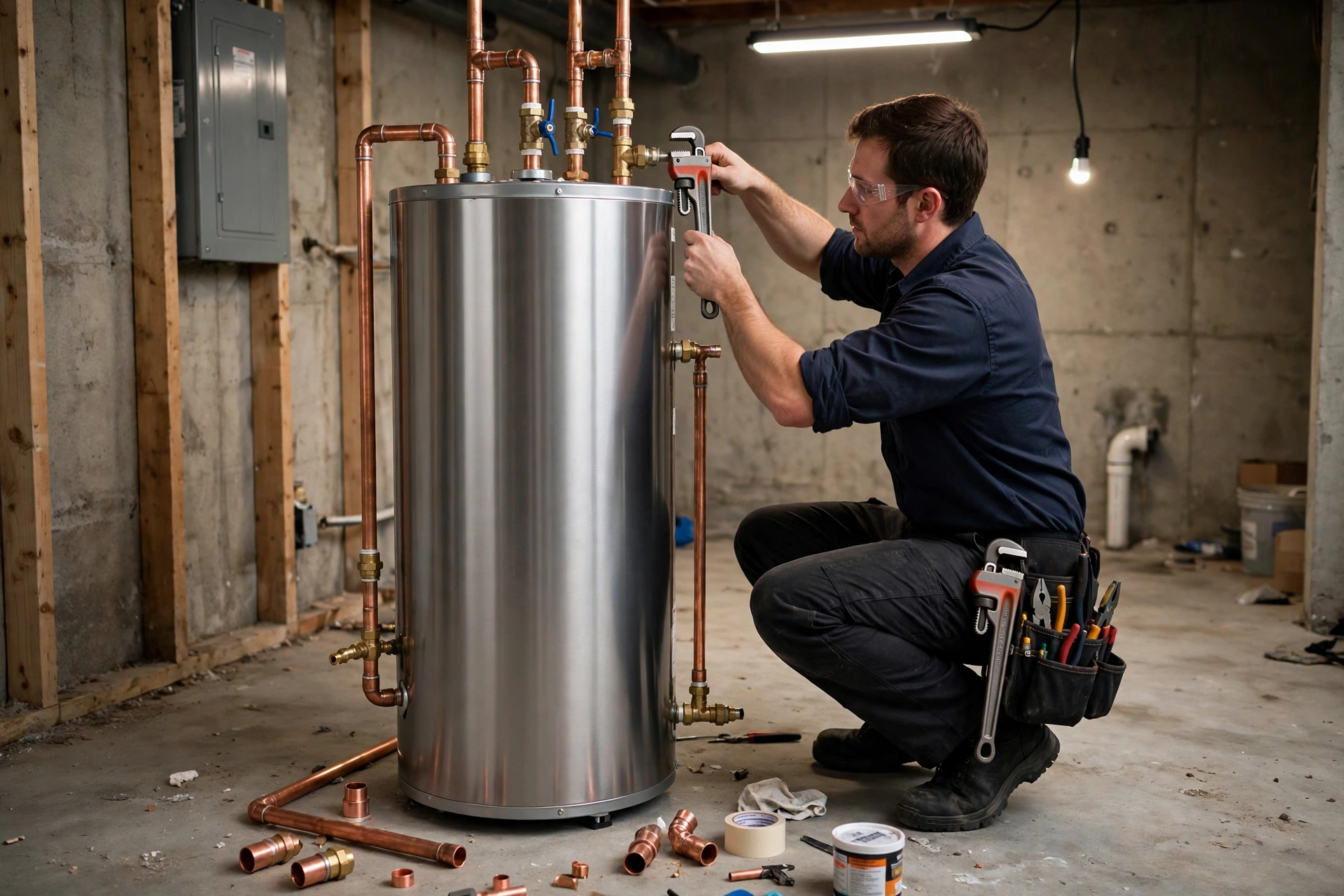
You may see a third option on the showroom floor: the heat pump or "hybrid" water heater. Instead of generating heat directly, it pulls warmth from the surrounding air, which makes it dramatically more efficient than a standard electric tank, often two to three times as efficient. The trade-offs are real, though. Hybrid units cost more upfront than standard electric tanks, they need sufficient surrounding air space and a climate that cooperates (a cold Illinois basement in January is not ideal), they are taller and noisier than conventional tanks, and they cool and dehumidify the room they sit in, which is a bonus in summer and a drawback in winter.
For a Belleville home with an electric tank in a reasonably warm utility space and plans to stay put for a decade, a hybrid can be a strong choice at replacement time, especially with utility rebates that sometimes apply. But it is a replacement-time decision, not a repair-time one: nobody retrofits a dying gas tank into a hybrid on an emergency timeline. If your current unit runs on gas, switching to a hybrid also means an electrical upgrade, since heat pump units need a dedicated circuit. Factor that into the installed price before comparing it to a like-for-like gas tank swap.
Frequently Asked Questions
Should I repair or replace my 10-year-old water heater?
At 10-plus years, lean toward replacement, especially if the repair costs more than a few hundred dollars or the tank shows rust. A 10-year-old tank is statistically near the end of its 8 to 12 year expected life, so repairs buy little time (Charles & Hudson, 2026).
What is the 50% rule for water heaters?
If the repair estimate exceeds about half the cost of a new comparable unit, replacement is usually the better financial choice. Combine it with the unit's age: an expensive repair on a young unit can still make sense, while a cheap repair on an ancient one often does not.
How much does water heater repair cost on average?
The 2026 national average is about $616, with most repairs falling between $228 and $1,017 based on over 16,000 verified projects (Angi, 2026). Simple fixes like a flush or thermostat run $80 to $300; major component work runs $400 to $900.
How much does a new water heater cost installed?
Nationally, a conventional tank runs $800 to $2,500 installed, and a whole-home tankless unit runs $1,500 to $4,500 installed, rising to $7,500+ if gas or venting upgrades are needed (Plumbing Price Guide, 2026; Angi, 2026).
Can a leaking water heater tank be repaired?
No. Once the tank itself leaks or rusts through, no component repair fixes it. Leaking valves and fittings can be repaired, but a leaking tank means replacement.
Is it worth switching from a tank to a tankless water heater?
It can be, if you plan to stay in the home long-term, value endless hot water, and your home can accommodate the gas and venting requirements without major upgrades. The payback on energy savings alone is slow, so treat it as a comfort and longevity upgrade rather than a money-saving one.
Related Guides
References
- Angi. (2026). Cost to repair a hot water heater [2026 data]. https://www.angi.com/articles/how-much-does-it-cost-repair-water-heater.htm
- Charles & Hudson. (2026). Water heater repair cost in 2026: Complete pricing guide. https://charlesandhudson.com/water-heater-repair-cost/
- Angi. (2026). How much does it cost to repair a tankless water heater? [2026 data]. https://www.angi.com/articles/tankless-water-heaters-don-t-expect-save-big.htm
- Carter's My Plumber. (2026). Water heater repair cost guide: Don't pay too much! (2026). https://www.cartersmyplumber.com/water-heater-repair-cost/
- Plumbing Price Guide. (2026). How much does a plumber cost? 2026 price guide. https://plumbingpriceguide.com/plumbing-cost/
Plumbing problem that won't wait?
Belleville IL Plumbers is available 24/7 across Belleville and St. Clair County. Call (618) 573-0073 for upfront written pricing before any work begins.